Amine Filtration Technology in Natural Gas Sweetening
Product Details
Learn more about the specifications, features and benefits of our high-performance filter element.
Description
In natural gas processing, refining, and petrochemical industries, amine gas treating (also known as amine sweetening or acid gas removal) is widely recognized as the most effective technology for removing acid gases such as hydrogen sulfide (H₂S) and carbon dioxide (CO₂). This process ensures that treated natural gas meets stringent quality standards for pipeline transportation, Liquefied Natural Gas (LNG) production, and downstream applications.
However, during continuous long-term circulation, the amine solution accumulates solid particles, corrosion products, hydrocarbon contaminants, and amine degradation byproducts. These pollutants reduce treating efficiency, cause equipment corrosion, foul heat exchangers, induce foaming, and increase operational expenses. Consequently, effective amine filtration is critical for maintaining stable operation in any gas sweetening unit.
1. What is Amine Gas Treating?
Amine gas treating is a chemical absorption process that utilizes an aqueous amine solution to selectively remove acid gases from sour gas. Raw natural gas often contains:hydrogen sulfide (H₂S), carbon dioxide (CO₂),water vapor, hydrocarbon impurities, solid particulates.
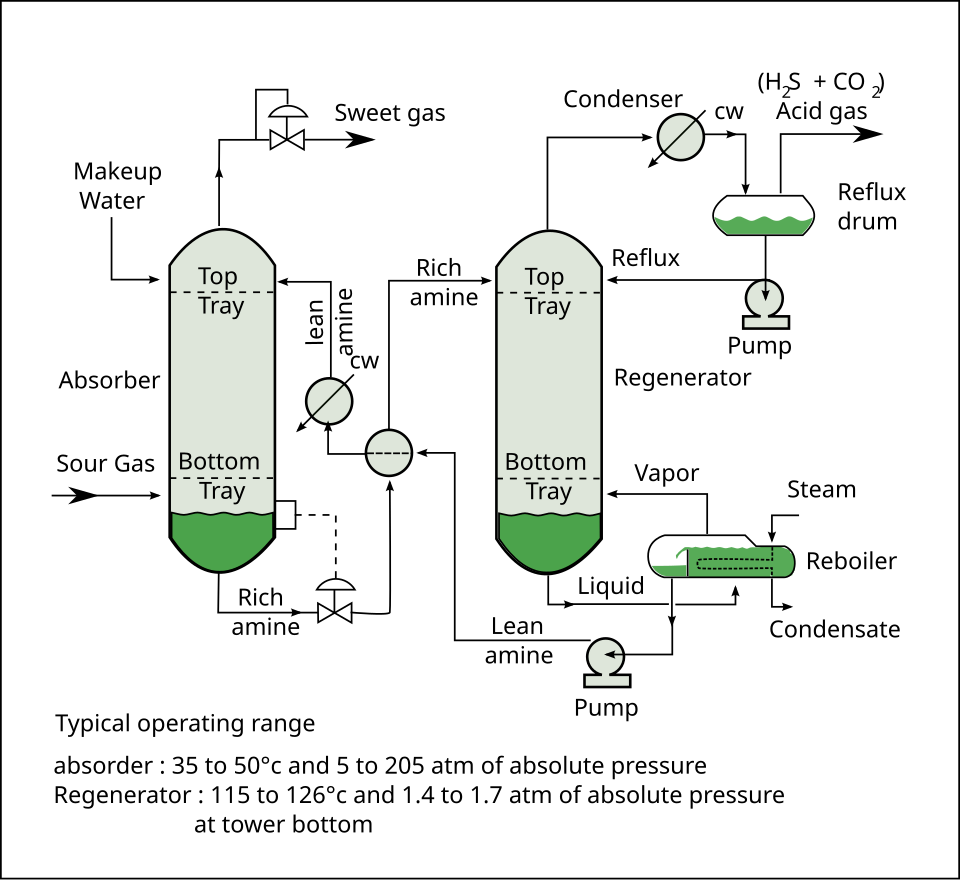
Unfiltered impurities can lead to pipeline corrosion, equipment damage, off-spec emissions, and downstream catalyst poisoning. A standard natural gas processing flow involves: raw gas entering the absorber tower; counter-current contact between the gas and the lean amine solution ; absorption of H₂S and CO₂ by the amine; rich amine routed to a regenerator column for stripping ; regenerated lean amine cooled and recycled back to the absorber.
Common amine solutions applied in amine plants include:
Amine Type | Primary Application |
MEA (Monoethanolamine) | Deep CO₂ removal |
DEA (Diethanolamine) | Traditional sour gas treatment |
MDEA (Methyldiethanolamine) | Selective H₂S removal; Widely used in LNG and large-scale gas plants |
2. Why Amine Systems Require Filtration
Although amine solutions are continuously recycled, operational contaminants inevitably build up within the amine process.
Corrosion Products:Continuous exposure of metal surfaces to acid gases, moisture, and amine solutions generates: iron sulfide FeS, oxides, fine metallic particles. These abrasive particulates result in valve wear, pump damage, heat exchanger plugging, and tower tray fouling.
Hydrocarbon Contaminants:Raw natural gas may carry liquid hydrocarbons, compressor lube oil, or heavy condensates. Once introduced into the amine unit, these organic compounds reduce absorption capacity, trigger severe foaming, and elevate amine losses.
Solid Particle Pollution: Sources include construction debris, external dust, corrosion scales, and activated carbon fines. Fine solids disrupt gas-liquid mass transfer and shorten filter lifespans.
3. Typical Amine Filtration Flow Diagram
A comprehensive filtration scheme is structured across the rich and lean loops:Raw Natural Gas
Absorber Tower
Rich Amine ────► Rich Amine Filter ────► Flash Drum ────► Regenerator
Lean Amine ◄──── Post-Filter / Carbon Bed ◄─── Cooler ◄──────┘
Return to Absorber
4. Rich Amine Filtration
Rich amine filtration is typically installed on the rich amine circulation loop, commonly downstream of the absorber or before heat exchangers., where the solution is cooler, under high pressure, and heavily loaded with acid gases . The primary objective is to protect downstream flash drums, rich/lean exchangers, and regenerators from fouling and erosion.
Key Contaminants in Rich Amine
Suspended Solids (Primarily FeS): Minute, sticky iron sulfide particles (often under 10 micron) shear off piping and column internals, acting as the main culprit for heat exchanger fouling.
Dissolved and Free Hydrocarbons: Condensates entering the rich amine can flash and carbonize in the regenerator, creating severe foaming.
Dissolved Gases: High partial pressures of H₂S and CO₂ require robust, sour-service-compliant equipment designs adhering to strict pressure and stress-corrosion cracking standards.
Typical Rich Amine Configuration
Particulate Filter: Efficiently traps FeS and other solids. Typical filtration ratings range from 5 to 10 micron (with 3 micron for high-purity requirements). Amine filter cartridges utilize high-flow pleated designs or stainless steel sintered mesh.
Coalescing Filter / Separator: Deployed for heavy hydrocarbon loads to separate micro-droplets of oil before they reach the flash drum, cutting off foaming at the source.
5. Lean Amine Filtration
In modern MDEA-based gas sweetening plants, lean amine filtration is essential to maintain solvent performance and prevent absorber foaming before it re-enters the absorber. This protects the contactor internals, pumps, and lean-rich exchangers.
Typical Contaminants in Lean Amine
Solid Particles: Residual corrosion products (FeS, rust) and silt.
Liquid Hydrocarbons: Compressor or condensate oils.
Heat-Stable Salts (HSS) and Degradation Products: Formed during high-temperature regeneration.
Three-Stage Lean Amine Purification Setup
Particulate Pre-Filter: Traps coarse suspended solids (5 to 25 micron) using polypropylene or fiberglass elements, protecting downstream beds.
Activated Carbon Bed: Adsorbs dissolved aromatic hydrocarbons, emulsified oils, and surface-active agents. Activated carbon canisters effectively eliminate foaming precursors.
Post-Filter / Guard Filter: Captures any migrating carbon fines (1 to 5 Micron) to guarantee ultra-clean lean amine enters the absorber.
6. Common Filter Types in Amine Systems
Pleated Filter Cartridges
Features: Large surface area, high dirt-holding capacity, slow differential pressure buildup, and easy replacement.
Materials: Polypropylene (PP) for chemical stability in amine environments, or fiberglass for high-efficiency fine particle retention.
Activated Carbon Canisters
Primary Role: Removes soluble organic compounds, organic acids, and surfactants that mechanical filters cannot capture. Industrial activated carbon canisters, such as 1120 and 1122 series designs, are commonly used for amine and glycol purification applications.
Applications: Essential across amine gas treating, glycol dehydration, and refinery gas cleanup.
Gas Coalescer Elements
Primary Role: Removes ultra-fine aerosols, liquid droplets, and mist (such as heavy hydrocarbons, compressor lube oil, and condensates from raw natural gas before entering the absorption tower. Industrial gas coalescer elements, such as high-efficiency fiberglass and pleated multi-layer designs, are commonly used to prevent liquid carryover and protect downstream amine units.
Applications: Essential across amine gas treating, natural gas sweetening, LNG processing, and sour gas treatment.
7. Amine Foaming Issues and Filtration Solutions
Root Causes of Foaming
Hydrocarbon Ingress: Unstable upstream separation introduces non-polar oils that lower surface tension.
Fine Suspended Solids: Microscopic FeS particles (5 micron) act as bubble nuclei, stabilizing gas-liquid interfaces.
Heat-Stable Salts & Degradation: Alters physical properties and increases foaming tendency.
Chemical Overdosing: Excessive antifoam or incompatible corrosion inhibitors.
How Effective Filtration Mitigates Foaming
Deploying precision amine filter cartridges removes solid bubble-stabilizers, while activated carbon canisters strip out dissolved surface-active agents. This combined defense restores normal surface tension, cuts antifoam consumption, and stabilizes the acid gas removal process.
8. Filter Selection Guidelines
Application | Recommended Filtration Rating |
Rich Amine Protection | 5~10 Micron |
Lean Amine Polishing | 1~5 Micron |
Activated Carbon Pre-Filter | 10~25 Micron |
Material Compatibility: Ensure the filter media withstands target amine concentrations, operating temperatures, pressures, and hydrocarbon levels.
Contaminant Loading: Select high-surface-area, gradient-density designs for heavy solid loads.
9. Troubleshooting Common Operational Issues
Issue | Cause | Solution |
High Differential Pressure | Severe particulate loading | Replace filter elements |
Amine Foaming | Hydrocarbon contamination | Install/replace activated carbon |
Increased Corrosion | FeS accumulation | Upgrade particulate filtration |
Lower Treating Efficiency | Amine contamination | Optimize the overall filtration loop |
10. Meitong Amine Filtration Solutions
Meitong Filter provides specialized industrial filtration solutions for the global energy sector, featuring: amine filter cartridges and MDEA filter cartridges; high-performance gas coalescer elements; heavy-duty activated carbon canisters; specialized coalescing filter housings
These products optimize natural gas processing, LNG operations, and refinery sour gas treatment by safeguarding equipment longevity and ensuring smooth amine plant performance.
Conclusion
Amine filtration remains an indispensable component of any efficient acid gas removal workflow. By integrating mechanical particulate filters and activated carbon canisters, operators can mitigate hydrocarbon fouling, suppress foaming, and guarantee reliable gas sweetening performance across all modern amine gas treating facilities.
Frequently Asked Questions
What micron filter is used for amine filtration?
Most amine systems use 5-10 micron filters for particulate removal and 1-5 micron filters for final polishing.
Why does amine solution foam?
Foaming is usually caused by hydrocarbon contamination, suspended solids, degradation products and surfactants.
Do activated carbon filters remove H2S or CO2?
No. Activated carbon filters remove hydrocarbons and organic contaminants, while amine absorbs acid gases.
Specifications
If you are interested in this filter, please contact us to get the price.
Features
Model Number
Twenty-two years of expertise in reliable, automated industrial filtration, supported globally across 50+ countries.
Meitong Filtration was established in 2003 and is located in Bazhou City, Hebei Province, China. We are a professional manufacturer dedicated to the development and production of industrial Filtration and purification solutions.
Why Choose a Custom Pool Filter
- 22+ years of industrial filtration expertise.
- Products exported to 50+ countries & regions.
- Automated production with strict quality control.
- Customized designs for various working conditions.
- You source directly from the manufacturer. This means factory-direct pricing, maximum value, and no middlemen.
Related Products
Explore our other high-quality filtration solutions

How to Remove Water from Hydraulic Oil: Causes, Testing Methods & Best Solutions
Industrial Filter Collapse Prevention Guide: Systemic Solutions for Filter Element Flattening
Coalescing Filter Elements: Complete Guide to Types, Applications, Selection and Replacement