Natural Gas Processing and Filtration Process Steps and Filter Applications
Natural Gas Processing and Filtration Process Steps and Filter Applications
Explore natural gas processing and filtration, including gas filters, coalescing filter elements and filter separators for equipment and pipeline protection.
Natural gas from a well usually needs treatment before it can enter a transmission pipeline or move into further processing. Depending on the source, it may contain water, liquid hydrocarbons, solids, carbon dioxide, hydrogen sulfide and other unwanted components.
A natural gas processing plant uses several treatment stages to prepare the gas for its intended use. Filtration supports these stages by controlling particles and liquid carryover, protecting equipment and helping keep circulating fluids clean.
This guide explains how natural gas is processed, where gas filters are used and what different filter cartridges do.
1. How Does Natural Gas Processing Work?
A typical natural gas processing sequence follows this general route:
Wellhead gas → Inlet separation → Gas filtration and coalescing → Acid gas removal, if required → Dehydration → NGL recovery or hydrocarbon dew point control, if required → Metering and pipeline delivery
The exact arrangement depends on gas composition, operating pressure and product requirements. Some stages may be combined, omitted or installed in a different order. Compression, cooling and filtration may appear at several points.
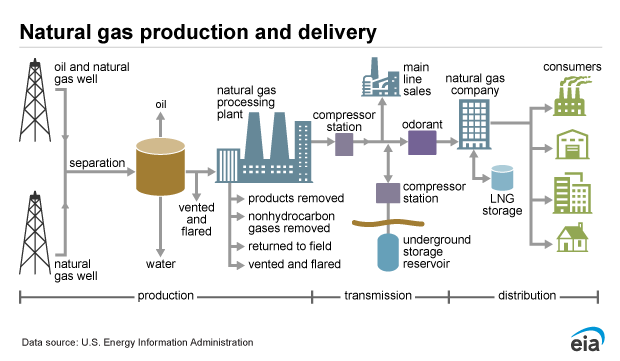
From a Natural Gas Well to a Processing Plant
Natural gas extraction brings gas from an underground reservoir to the surface through a well. The produced stream may contain gas, water, condensate and solids.
After initial separation at the production site, gathering pipelines carry the gas to treatment facilities. Some treatment may take place near the well, while other steps occur at a central gas processing plant.
Understanding NGL and LNG
These terms describe different products:
· NGL — Natural Gas Liquids: Hydrocarbons recovered from natural gas, such as ethane, propane, butanes and heavier components.
· LNG — Liquefied Natural Gas: Natural gas, mainly methane, cooled into a liquid for transportation or storage.
NGL recovery separates valuable hydrocarbons from the gas stream. LNG production liquefies treated natural gas.
2. Common Contaminants in Natural Gas Processing
A suitable gas filtration system starts with understanding what needs to be removed. Contaminants can arrive with the wellhead stream or develop during transportation, compression and treatment.
Contaminant | Common Source | Typical Treatment |
Sand and solid particles | Wellhead gas and upstream operations | Inlet separation and particulate filtration |
Rust and scale | Corrosion and deposits in piping or equipment | Gas or liquid particulate filters |
Water and condensate droplets | Entrained liquids or condensation during cooling | Separators and gas coalescers |
Lubricating oil mist | Carryover from upstream compression equipment | Gas coalescing filters |
Amine or glycol droplets | Carryover from contactors and related systems | Gas coalescers in the affected outlet stream |
Activated carbon or molecular sieve fines | Dust released from adsorbent materials | Downstream particulate filtration |
These contaminants can contribute to fouling, solvent foaming, liquid carryover and additional maintenance.
3. Inlet Separation
Removing Free Water and Condensate
The first stage commonly removes bulk liquids from the incoming stream. Equipment may include slug catchers, two-phase separators and three-phase separators.
The separated gas, water and hydrocarbon liquids then move to their respective treatment systems.
Bulk separation reduces the load on downstream natural gas filters and processing equipment.
Combining Separation with Fine Filtration
An inlet separator may leave smaller droplets and fine particles in the gas. Additional filtration or coalescing can be installed when the downstream process requires cleaner feed gas.
A natural gas filter separator can combine particle filtration with liquid separation. Its performance depends on the vessel design, filter elements, flow conditions and drainage arrangement.
Mesh pads and vane packs inside a separator should be distinguished from replaceable filter cartridges.
4. Gas Filtration and Coalescing
Gas Particulate Filtration
A gas particulate filter Cartridge captures solids such as rust, scale and dust.
These particles may enter with the feed stream or come from upstream piping and equipment. Removing them helps protect contactors, adsorbent beds, compressors, valves and instruments.
Gas Coalescing and Liquid Droplet Removal
A gas coalescing filter element captures fine liquid droplets and combines them into larger drops. The collected liquid then drains from the element and is removed through the vessel's drainage system.
A coalescing filter may be used to control:
· Water droplets.
· Hydrocarbon condensate.
· Lubricating oil mist.
· Entrained amine or glycol.
Coalescing filter elements remove liquid droplets. Water vapor requires a dehydration process.
Selecting a Filtration Arrangement
A gas stream may contain both solids and liquids. Depending on the contamination load, the arrangement may use particulate filtration, a filter separator, a gas coalescer or a combination.
When comparing gas filters, check more than a micron rating. Relevant factors include removal efficiency, test conditions, flow direction, pressure drop, liquid loading and drainage performance.
5. Amine Gas Treating and Filtration
How Amine Treating Removes Acid Gases
Amine treating reduces hydrogen sulfide, or H₂S, and carbon dioxide, or CO₂.
Gas contacts an amine solution in an absorber. The solution takes up acid gases and becomes rich amine. It then passes through regeneration, where the absorbed gases are released. The regenerated lean amine returns to the absorber.
Common solvents include MEA, DEA and MDEA.
This is a natural gas purification step. Particulate filters support the process by keeping contaminants under control; the amine solution performs the acid gas removal.
Filtration in the Amine System
Hydrocarbon droplets, oil and suspended solids can contribute to foaming and fouling. Common protection measures include:
· Inlet gas coalescing: Limits liquid contamination entering the absorber.
· Liquid particulate filtration: Removes suspended solids from circulating amine.
· Activated carbon adsorption: Controls hydrocarbons and other organic contaminants that the selected carbon can adsorb.
· Post-carbon filtration: Captures carbon fines before they reach downstream equipment.
Where activated carbon is used, upstream particulate filtration can reduce solids entering the carbon bed. The arrangement may use full-flow, side-stream or combined treatment, depending on the system design.
6. Natural Gas Dehydration and Filtration
Dehydration removes water vapor that remains after free liquids have been separated.
Two common methods are TEG dehydration and molecular sieve dehydration. Selection depends on the required water content and downstream operating conditions.
TEG Dehydration and Glycol Filtration
Triethylene glycol, or TEG, absorbs water from natural gas in a contactor. The water-rich glycol is regenerated and returned to circulation.
Typical filtration points include:
· Contactor inlet: Gas coalescing filters limit hydrocarbon droplets, oil mist and other liquid carryover.
· Before the carbon bed: A Liquid Particulate Filter Cartridge removes suspended solids.
· Activated carbon treatment: Adsorbs selected hydrocarbons and other organic contaminants.
· Activated carbon treatment: A particulate filter captures carbon fines.
Glycol filtration helps reduce contamination-related foaming and fouling. Dehydration performance also depends on glycol concentration, circulation rate, temperature and regeneration conditions.
Glycol Carryover Control
Gas leaving the contactor may carry glycol droplets. A downstream gas coalescer can help recover this liquid and protect the next processing stage.
Flash gas may also need coalescing treatment, depending on its destination and liquid content.
Molecular Sieve Dehydration and Bed Protection
Molecular sieves are commonly used when very low water content is needed, including cryogenic NGL recovery and LNG production.
Protection generally involves two locations:
· Upstream of the bed: Coalescing and, where needed, particulate filtration limit liquids and solids entering the adsorbent.
· Downstream of the bed: Dry gas particulate filters capture molecular sieve dust.
The molecular sieve is normally a granular adsorbent loaded into a vessel. It is a separate component from the protective filter elements.
7. Hydrocarbon Dew Point Control and NGL Recovery
Hydrocarbon Dew Point Control
At a given pressure, the hydrocarbon dew point is the temperature at which hydrocarbons begin to condense from the gas.
Controlling this temperature helps reduce liquid formation during subsequent transportation or processing.
Cooling, refrigeration, expansion and other treatment methods may be used, depending on the required result.
NGL Recovery and Fractionation
NGL recovery separates selected hydrocarbons from the methane-rich stream.
The recovered mixture can then enter fractionation, where differences in boiling points allow it to be separated into products such as ethane, propane, butanes and natural gasoline.
The equipment arrangement depends on the feed composition and desired products.
Filtration for Gas and Liquid Hydrocarbon Streams
Gas filtration protects downstream equipment from particles and entrained liquids.
Liquid hydrocarbon branches may need additional treatment:
· Liquid particulate filters remove suspended solids.
· Liquid–Liquid Coalescer Elements combine dispersed droplets, such as water droplets in a hydrocarbon liquid.
· help separate the enlarged droplets in compatible equipment designs.
These applications require selection based on the actual liquid properties and operating conditions.
8. Additional Treatment — Nitrogen Rejection and Mercury Removal
Filtration Protection for Nitrogen Rejection Units
Some gas streams require nitrogen rejection to meet product requirements. Ordinary filter cartridges do not remove nitrogen molecules.
Protective filters instead control particles and liquid carryover entering associated equipment. Where molecular sieve dehydration is used before cryogenic processing, downstream dust filters help keep adsorbent fines away from sensitive equipment.
Filtration Protection for Mercury Removal Beds
Mercury removal uses specialized adsorbent materials selected for the feed gas and operating conditions.
An inlet gas coalescer can reduce liquid contamination entering the bed. Downstream particulate filtration captures adsorbent fines.
General-purpose activated carbon and standard dehydration molecular sieves should not automatically be treated as suitable mercury-removal media.
9. Compression, Metering and Pipeline Protection
Compressor Process Gas Filtration
At the compressor inlet, gas filters help control solids and entrained liquids.
For compression systems that may introduce lubricating oil, downstream coalescing may also be required to meet the needs of the next process stage.
Lubricating Oil and Fuel Gas Filtration
These are separate applications:
· Process gas filtration treats the gas being compressed or processed.
· Lubricating oil filtration controls particles in the equipment's oil circuit.
· Fuel gas filtration treats gas supplied to engines, turbines or other fuel users.
A fuel gas coalescer can remove entrained liquid droplets. Where gas turbine filtration concerns the fuel supply, it should be distinguished from the turbine's combustion air filtration system.
Metering and Pipeline Protection
Before delivery, the gas must meet the applicable quality and operating requirements.
Natural gas filtration helps control rust, dust and liquid carryover that could affect valves, meters and downstream equipment. Compression requirements depend on the available pressure and receiving pipeline conditions.
10. Natural Gas Filtration Applications at a Glance
Application | Common Filter Products | Main Contaminants Controlled |
Inlet gas treatment | Gas particulate filters, filter separators and gas coalescers | Solids, liquid droplets and oil mist |
Amine absorber inlet | Gas coalescing filter elements and optional prefilters | Hydrocarbon droplets, oil and solids |
Amine circulation | Liquid particulate filters, carbon adsorption and postfilters | Suspended solids, selected organic contaminants and carbon fines |
TEG contactor inlet | Gas coalescers | Hydrocarbon droplets and oil mist |
Glycol circulation | Liquid filter cartridges, carbon adsorption and postfilters | Solids, selected organic contaminants and carbon fines |
Contactor or flash gas outlet | Gas coalescing filters | Glycol and other liquid carryover |
Molecular sieve inlet | Gas coalescers and optional particulate prefilters | Liquid droplets and solids |
Molecular sieve outlet | Dry gas particulate filters | Adsorbent dust |
Liquid hydrocarbon treatment | Liquid particulate filters and liquid–liquid separation elements | Solids and dispersed liquid droplets |
Compression and delivery | Gas particulate filters and coalescers, as required | Rust, dust and liquid carryover |
11. Filter Cartridge Types Used in Gas Processing
The same product category may serve several locations. Start by identifying the fluid and the form of contamination.
Filter Type | Main Function |
Gas Particulate Filter Cartridge | Captures solids from a gas stream |
Gas Coalescing Filter Element | Combines fine liquid droplets so they can be drained |
Liquid Particulate Filter Cartridge | Captures suspended solids from a liquid |
Activated Carbon Canister | Adsorbs selected contaminants |
Liquid–Liquid Coalescer Element | Enlarges droplets of one liquid dispersed in another |
Liquid–Liquid Separator Element | Helps separate coalesced droplets in a matched system |
Pleated, depth and wound describe construction. Glass fiber, polypropylene, cotton and metal describe materials. Suitability also depends on temperature, chemical compatibility, efficiency and differential pressure.
12. Information Needed for Filter Selection
To select a new filter or assess a replacement filter cartridge, provide:
· Installation location and process fluid.
·Flow rate, stating whether gas flow is at standard or actual conditions.
· Operating pressure and temperature range.
· Known contaminants and estimated loading.
· Required removal performance and allowable pressure drop.
· Existing element model, dimensions, connections, photographs or drawings.
For amine and glycol service, include the solvent type and concentration.
Dimensions alone do not confirm suitability. Replacement filter cartridges also need compatible seals, flow direction, support construction and filtration performance.
13. Frequently Asked Questions
What Does a Gas Filter Do?
A gas filter controls contaminants in a gas stream. A particulate element captures solids, while a coalescing element collects fine liquid droplets. The required type depends on the application.
Can Natural Gas Filters Remove Water Vapor?
Standard particulate filters and gas coalescers do not perform dehydration. Glycol or molecular sieve systems are commonly used to remove water vapor.
Can Amine and Glycol Systems Use the Same Filter Cartridge?
Some products may suit both services, but compatibility must be checked against solvent concentration, temperature, seals and performance requirements.
Why Is a Filter Installed After Activated Carbon?
A postfilter captures carbon fines and reduces their carryover into heat exchangers, reboilers, pumps and other downstream equipment.
Is a Finer Micron Rating Always Better?
The rating should meet the required cleanliness while allowing acceptable pressure drop and service life. Compare efficiency and test conditions alongside the stated micron rating.
When Should Filter Elements Be Replaced?
Follow the equipment and element supplier's requirements, considering differential pressure, outlet quality and operating conditions. Activated carbon replacement also depends on adsorption performance.
What Affects Gas Filter Price?
Price depends on element size, media, construction, seals, performance requirements and operating conditions. A useful quotation should identify the application and required specification, rather than relying on dimensions alone.
14. Selecting Filters for Your Gas Processing Application
A suitable filtration arrangement matches the contaminants, operating conditions and equipment requirements at each installation point. For filter selection or replacement assessment, provide your operating conditions and existing element details. Model numbers, dimensions, photographs and drawings help identify the appropriate gas filters, coalescing elements or liquid filter cartridges for evaluation.