Coalescing Filter Elements: Complete Guide to Types, Applications, Selection and Replacement
Coalescing Filter Elements: Complete Guide to Types, Applications, Selection and Replacement
Complete guide to coalescing filter elements, covering types, applications, materials, selection, replacement, cross-reference, and OEM customization.
1. What is a Coalescing Filter Element?
A coalescing filter element is a specialized fluid separation device constructed from high-efficiency porous media designed to continuously capture and remove liquid droplets, aerosols, suspended particulates, and vapor impurities from process gas or liquid streams. Operating through a multi-stage coalescing mechanism, it forces sub-micron liquid aerosols to collide, merge, and grow into larger droplets that naturally drain away via gravity.
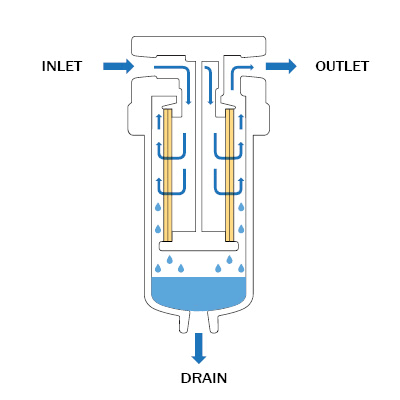
Core Structural Layers & Functionality
A typical coalescing element may consist of multiple functional layers:
Inner Layer (Particulate Protection): Built with fine micro-glass or synthetic mesh to capture solid contaminants, protecting the outer media from premature clogging.
Middle Layer (Coalescing Zone): A deep-bed gradient porous matrix where fine mist and liquid aerosols continuously collide and merge into macro-droplets.
Outer Layer (Drainage & Discharge): Constructed with a coarse mesh or outer foam sock that facilitates rapid gravity drainage into the sump, preventing liquid re-entrainment into the clean exit fluid.
2. What are the Functions of Coalescing Filter Element?
The primary function of a coalescing filter element is to remove liquid contaminants from a process stream while also capturing solid particles. Depending on the application, coalescing filter elements can provide both gas-liquid and liquid-liquid separation.
Gas-Liquid Separation: Removes water droplets, oil aerosols, and liquid contaminants from gas streams such as natural gas, seal gas, and compressed air.
Liquid-Liquid Separation: Separates a dispersed liquid phase, such as water, from a continuous liquid phase such as fuel, diesel, or lubricating oil.
Particle Filtration: Captures fine solid particles and helps prevent contamination of downstream equipment.
Equipment Protection: Reduces corrosion, erosion, fouling, and contamination in compressors, turbines, valves, meters, and other process equipment.
By removing liquid and solid contaminants, coalescing filter elements help maintain fluid cleanliness, protect downstream equipment, and improve the reliability of industrial filtration systems.
3. How does Coalescing Filter Elements work?
A coalescing filter element typically uses an inside-to-outside flow path to remove liquid droplets and solid particles from a process stream. The element usually consists of multiple layers of coalescing media, with finer fibers on the upstream side and a supporting or drainage layer toward the outside.
When contaminated gas or liquid enters the filter element, solid particles are captured by the filter media, while fine liquid aerosols and droplets are collected by the coalescing fibers. As the small droplets move through the media, they combine into larger droplets through the coalescing process.
The larger liquid droplets then move toward the outer side of the element and drain by gravity into the sump at the bottom of the filter housing. The cleaned process fluid exits the element with reduced liquid and particulate contamination.
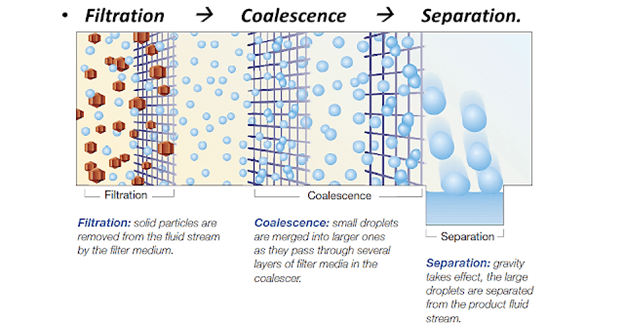
Three Main Filtration Mechanisms:
Diffusion: Very small particles and liquid aerosols undergo random Brownian motion, increasing their chance of contacting and being captured by the filter fibers.
Interception: Particles and droplets following the gas or liquid flow path may come into contact with the filter fibers and become trapped when their trajectory passes close enough to the fiber surface.
Direct Impaction: Larger particles and droplets cannot easily follow changes in the fluid flow direction. They collide directly with the filter fibers and are retained by the media.
Together, these mechanisms allow a coalescing filter element to capture fine solid particles and liquid aerosols, while the coalescing action combines small droplets into larger droplets that can be efficiently drained from the system.
For natural gas and other gas filtration applications, proper element sizing, flow rate, filter media, operating pressure, and liquid loading are important factors in achieving effective coalescing performance and maintaining a low pressure drop.
Liquid/Liquid Coalescers - Liquid Separation and Particle Removal
4. Which Contaminants does Coalescing Filter Element Remove?
A coalescing filter element is primarily designed to remove liquid contaminants and fine solid particles from process fluids. Depending on the application, a coalescer element can remove water, oil aerosols, liquid droplets, and suspended particulate contaminants from gas and liquid streams.
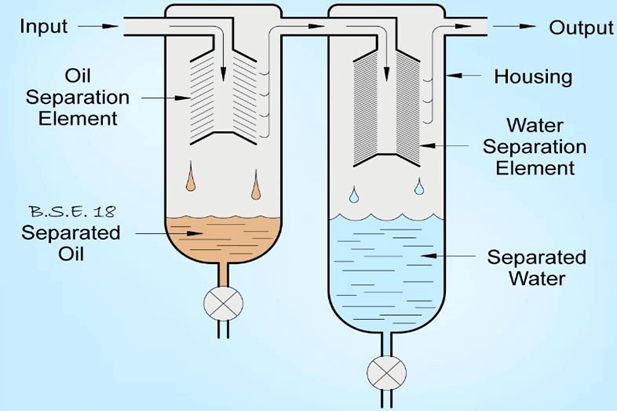
Water: Coalescing filter elements remove free water and entrained water droplets from natural gas, compressed air, fuel, and other process fluids. The coalescing media combine small water droplets into larger droplets, allowing them to drain from the filter housing.
Oil: Oil coalescing filter elements remove oil aerosols, oil mist, and liquid oil droplets from gas and air streams. They are commonly used in compressed air, natural gas, fuel gas, and oil & gas filtration applications.
Solid Particles: Coalescer elements also capture solid contaminants such as dust, rust, sand, pipe scale, and other suspended particles. Installing a particulate pre-filter or strainer upstream can reduce the particle load and help extend coalescing filter element service life. Installing an upstream particulate pre-filter can significantly reduce solid contaminant loading and may extend coalescing element service life.
In short, coalescing filter elements remove water, oil, liquid aerosols, and solid particles, helping protect downstream equipment and maintain the cleanliness of natural gas, compressed air, fuel, and industrial process fluids.
5. Types of Coalescing Filter Elements
There are two main types of coalescing filter elements, classified according to the process fluid and separation application: liquid-liquid coalescing filter elements and gas-liquid coalescing filter elements.
Gas-Liquid Coalescing Filter Elements
Gas-liquid coalescers remove liquid droplets, oil aerosols, water, and fine solid particles from gas or air streams. They are widely used for natural gas, fuel gas, seal gas, compressed air, and process gas filtration.
Common applications include:
Natural gas coalescing
Fuel gas coalescing
Seal gas coalescing
Oil coalescing
Compressed air coalescing
Diesel and fuel filtration
Condensate coalescing
Liquid-Liquid Coalescing Filter Elements
Liquid-liquid coalescing elements are designed to separate immiscible liquid phases, such as removing water from hydrocarbons, oils, fuels, and solvents. They are widely used for oil-water separation, hydrocarbon purification, solvent treatment, and condensate treatment, as well as for removing contaminants such as water, amines, caustic solutions, and other immiscible liquids from hydrocarbon streams.
Typical applications include:
Water removal from hydrocarbon streams
Water removal from fuel and lubricating oil
Oil-water separation
Hydrocarbon purification
Removal of amines from hydrocarbon streams
Removal of caustic solutions from hydrocarbons
Solvent purification and phase separation
Condensate treatment
Refinery and petrochemical process liquid separation
Chemical process liquid-liquid separation
6. What Material is Coalescing Filter Element Made of?
Coalescing filter elements can be manufactured from a variety of filtration media and structural materials, depending on the application, fluid properties, operating temperature, pressure, required separation efficiency, and expected service life. The selection and arrangement of the coalescing media are also critical to filtration and separation performance.
Common materials used in coalescing filter elements include fiberglass/microglass, cellulose, polyester, polypropylene, nylon, fluoropolymer materials, and stainless steel. Coalescing filter elements can be made from natural, synthetic, or combined materials. The media can be impregnated to improve durability and mechanical strength, and designed with single- or multi-layer structures for different filtration requirements. Pleated media can also provide a larger filtration area and higher dirt-holding capacity.
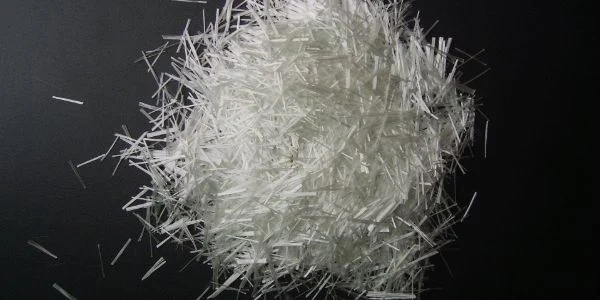
coalescer filter material fiberglass
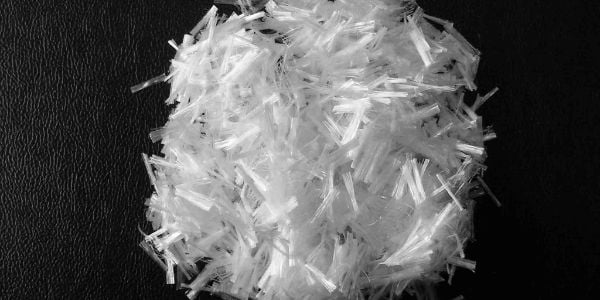
coalescer filter material polyester
Fiberglass / Microglass: Widely used for high-efficiency gas-liquid coalescing applications. Their fine fiber structure provides excellent depth filtration and helps capture fine liquid aerosols and solid particles. Microglass media are commonly used in natural gas, oil & gas, compressed air, and hydrocarbon filtration.
Synthetic Media: Polyester, polypropylene, and nylon can be used as coalescing media, pre-filter layers, support layers, or drainage layers. Synthetic media offer flexible material options and can provide good chemical compatibility and mechanical strength for specific applications.
Cellulose: A cost-effective natural filtration material commonly used for particulate pre-filtration. It can be pleated to increase the filtration surface area and dirt-holding capacity. In some coalescing filter designs, cellulose is combined with finer microglass media.
Stainless Steel: Can be used for filter media, support tubes, retaining screens, and other structural components. Stainless steel mesh and sintered metal media are suitable for applications requiring high mechanical strength, temperature resistance, corrosion resistance, or cleanability.
Multi-Layer Construction: Many industrial coalescing filter elements use a multi-layer media structure rather than a single material. Different layers can provide pre-filtration, fine coalescing, liquid drainage, and mechanical support.
For natural gas and gas-liquid coalescing applications, microglass/fiberglass is a common choice for the primary coalescing layer, while synthetic materials, cellulose, and stainless steel can be selected for additional filtration or structural functions.
7. What are the Benefits of using Coalescing Filter Element?
Using coalescing filters offers numerous advantages including:
Efficient removal of liquid and solid contaminants at various micron rating by up to 99.99%
Reduction in the concentration of liquid aerosols contaminants to below 5 ppm
You can easily upgrade or customize the filter elements and housing to meet the special requirements of your filtration system.
Provision of high surface area for removal of impurities
Dual application, that is, solid and liquid contaminants filtration
Lower costs of operation and maintenance
Protection of downstream system components from corrosion
Reduction of wear and tear of sensitive equipment in the system
Provision of process fluids that meet the cleanliness standards required by end-users and different OEM specifications.
Reduced downtime costs
Extended fluid life in hydraulic systems
Improved system reliability and durability
8. What are the Components of Coalescing Filter Element?
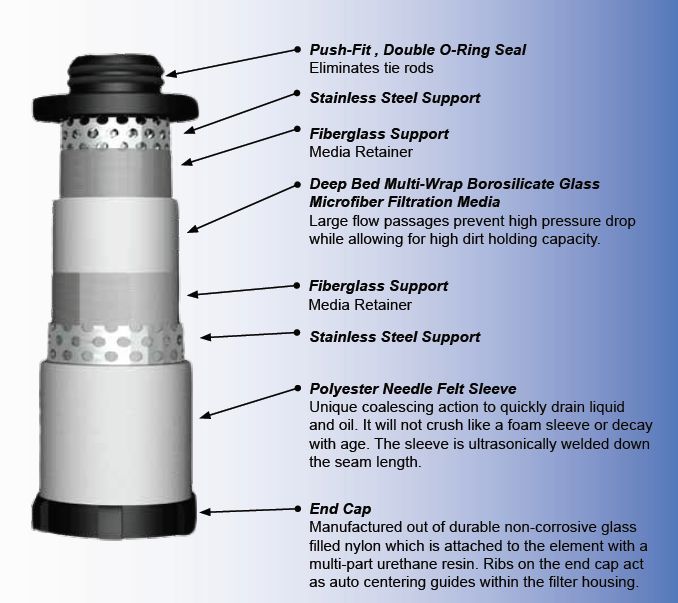
The design of a coalescing filter element varies by manufacturer and application. However, a typical coalescing filter element consists of several key components that work together for filtration, coalescence, drainage, and mechanical support.
Main Components of a Coalescing Filter Element:
Filter Media: The primary filtration layer that captures solid particles and fine liquid droplets while initiating the coalescing process.
Drainage Layer: Also called the anti-re-entrainment layer, it collects and drains coalesced liquid to prevent liquid carryover.
Support Core: Usually made of stainless steel or other durable materials, the internal or external support core provides mechanical strength and prevents media collapse under pressure.
Media Retainer: Holds and protects the filter media while providing additional mechanical support.
End Caps: Installed at both ends of the element, end caps provide structural support and ensure proper installation and sealing within the housing.
O-Ring Seal: Provides a tight seal between the filter element and housing to prevent fluid bypass. Common configurations include double O-rings, 222, and 226 seals, depending on the filter design.
Air Distribution Duct: Helps distribute gas or air evenly through the filter media for consistent filtration performance.
Location Ring: Helps position the element correctly inside the housing and reduces movement or vibration during operation.
The exact coalescing filter element construction may vary depending on the manufacturer, filter model, flow direction, operating pressure, and application requirements.
9. What are the Applications?
Common coalescing filter element applications include:
Compressed Air Filtration: Removes oil aerosols, water droplets, and fine particles from compressed air. Protects pneumatic equipment, valves, cylinders, and pneumatic tools.
Natural Gas & Seal Gas Filtration: Removes water, hydrocarbon condensates, oil mist, and liquid contaminants. Used for gas transmission, processing, compressor systems, and seal gas systems.
Sterile & Instrument Air Pre-Filtration: Used as pre-filtration for sterile air and instrumentation/process control air. Helps protect sensitive downstream equipment.
Oil & Water Separation: Removes free water, oil mist, and liquid contaminants from lubricating and hydraulic oils. Also used in fuel and hydrocarbon filtration systems.
Fuel Filtration: Used for jet fuel, diesel, marine fuel, and other hydrocarbon fuels. Separates water and particulate contamination to protect fuel systems.
Petrochemical & Process Gas Filtration: Used in petrochemical and chemical processing applications. Suitable for filtration of gases such as oxygen, nitrogen, and hydrogen sulfide, depending on material and process requirements.
Protection of Desiccants and Drying Systems: Prevents liquid aerosols and oil contamination from reaching desiccants, dryers, and refrigeration equipment. Helps extend the service life of downstream filtration and drying media.
Mist Elimination: Removes fine liquid aerosols, oil mist, and water mist from gas streams. Common in compressor, process gas, and industrial air systems.
Pneumatic & Instrumentation Equipment Protection: Protects pneumatic valves, cylinders, control instruments, and pneumatic tools from oil and water contamination.
Industrial & Manufacturing Processes: Used in food packaging, paint processes, automotive manufacturing, electrical processes, and other applications requiring clean compressed air or process gas.
Vacuum Systems: Used to protect vacuum pumps and downstream vacuum equipment from oil mist and liquid contamination.
Gas & Process Equipment Protection: Helps protect compressors, turbines, pumps, valves, meters, instrumentation, and other sensitive equipment from liquid carryover.
10. How Do Coalescing Filter Elements Compare with Other Filter Elements?
The main difference lies in their filtration function and operating principle.
Coalescing filters provide an additional liquid-removal function. Particulate filters mainly capture solid contaminants such as dust, rust, and other suspended particles, while coalescing filters are designed for applications where both particulate and liquid contamination need to be controlled.
Coalescing filter elements also differ from adsorption filter elements in both construction and filtration mechanism. Adsorption filters use an adsorbent material, such as activated carbon, to capture certain gaseous contaminants and oil vapor. However, they are not primarily designed for removing bulk liquid droplets or particulate contamination.
Therefore, the choice of filter element depends on the type of contaminants that need to be removed:
Coalescing filter: Removes liquid droplets, oil aerosols, and fine solid particles.
Particulate filter: Primarily removes solid particles.
Adsorption filter: Removes oil vapor and other gaseous contaminants through adsorption.
In many compressed air and gas filtration systems, these filter types may be used together as part of a multi-stage filtration system to achieve the required level of air or gas purity.
11. How Do You Determine the Efficiency of Coalescing Filter Elements?
Coalescing filter performance can be evaluated using standardized test methods such as ISO 12500-1 for compressed-air coalescing filters. Testing may evaluate oil aerosol carryover, filtration efficiency, and pressure drop under defined operating conditions.
The test is conducted at 7 bar(g) (101.5 psig) and 20°C, with the filter operating at 100% of its rated airflow. A controlled oil aerosol challenge is introduced upstream of the filter element using ISO VG 46 mineral oil, with an average particle size of approximately 0.15–0.4 μm and a challenge concentration of 10 or 40 mg/m³.
The filter element is conditioned until it reaches a stable saturated (wet) condition. The initial dry pressure drop and saturated pressure drop are then measured. Downstream oil carryover is determined according to ISO 8573-2 using an appropriate sampling and analytical method.
For reliable results, three filter elements of the same type and size are tested, with each element tested three times. The results are averaged and reported as oil carryover, filtration efficiency, initial dry pressure drop, and saturated pressure drop.
12. What Factors Affect the Performance of Coalescing Filter Elements?
The performance and filtration efficiency of a coalescing filter element depend on several design, operating, and process conditions.
Key factors affecting coalescing filter performance include:
Upstream pre-filtration: Installing a pre-filter helps remove larger particles and bulk liquids before they reach the coalescing element, reducing contaminant loading and extending filter service life.
Contaminant characteristics: The viscosity, density, surface tension, and chemical properties of the liquid contaminants influence droplet formation, coalescence, and separation efficiency.
Droplet size: Smaller liquid droplets and aerosols are more difficult to capture and require advanced multi-layer coalescing media to achieve efficient removal.
Filter media structure: The fiber diameter, media thickness, layering design, and void volume affect contaminant capture efficiency, airflow resistance, and pressure drop.
Operating flow velocity: The process fluid velocity must be maintained within the optimal range. Excessive velocity can increase pressure drop and cause liquid re-entrainment, reducing separation efficiency.
Contaminant loading: High levels of solids, oil, or liquid contamination increase the loading on the filter element and can shorten service life.
Pressure drop: As contaminants accumulate, pressure drop increases. Excessive pressure drop may reduce filtration performance and indicate the need for filter replacement.
Media porosity and void volume: A filter media with higher void volume provides lower initial pressure drop, greater contaminant holding capacity, and longer operating life.
Selecting the correct coalescing filter element requires balancing filtration efficiency, pressure drop, contaminant loading capacity, and operating conditions.
13. How Do You Know When to Replace a Coalescing Filter Element?
A coalescing filter element should be replaced when it reaches the manufacturer's recommended differential pressure (ΔP) or its maximum service life limit. During normal operation, liquid aerosol saturation and solid particulate accumulation gradually narrow the flow passages within the microfiber matrix, increasing flow resistance. A clean coalescing element typically exhibits an initial pressure drop of 1–2 psi (0.07–0.14 bar). As the element loads, replacement is generally required when the differential pressure reaches 8–15 psi (0.55–1.0 bar). Operating beyond this threshold drastically increases compressor energy costs, risks media rupture, and causes liquid carryover downstream.
Key Replacement Triggers Include:
Differential Pressure (ΔP): Routinely monitored via differential pressure gauges, pop-up indicators, or automated alarm switches.
Annual Service Interval (12 Months): Even if ΔP remains low, elements should be replaced annually (or every 4,000–8,000 operating hours) to prevent chemical degradation of the media binders and microfibers.
Downstream Liquid Carryover: Presence of oil mist or liquid aerosols downstream indicates internal channeling or media rupture, requiring immediate replacement regardless of pressure readings.
Timely element replacement ensures optimal aerosol separation, protects sensitive downstream equipment, and optimizes long-term system operating costs.
14. What Specifications Should You Check Before Ordering a Coalescing Filter Element ?
Selecting the right coalescing filter element is essential for achieving efficient liquid aerosol removal, protecting downstream equipment, and maintaining reliable system performance.
Flow Rate and Filtration Capacity: The filter element should match the system flow requirements. An undersized element can cause excessive pressure drop, reduced filtration efficiency, and shorter service life.
Required Filtration Efficiency and Air/Gas Cleanliness: Choose a filter element based on the required cleanliness level of the application. The element should effectively remove oil aerosols, water droplets, and solid contaminants to protect downstream equipment.
Process Fluid Compatibility: The filter media, support materials, and sealing components must be compatible with the process fluid. Consider factors such as hydrocarbons, moisture, chemicals, and corrosive gases.
Operating Pressure and Temperature: The selected filter element must withstand the system's maximum operating pressure and temperature to ensure reliable performance and prevent premature failure.
Filter Media and Material Selection: The media structure, fiber type, porosity, and support design directly affect filtration efficiency, pressure drop, and service life. High-quality coalescing elements typically use multi-layer microfiber or synthetic media.
Initial Pressure Drop and Energy Consumption: A low initial pressure drop helps reduce energy consumption and operating costs. The filter should provide efficient separation while maintaining low flow resistance.
Contaminant Loading and Pre-Filtration: Coalescing filters are designed mainly for liquid aerosol removal. Installing a pre-filter can reduce solid contamination and extend the service life of the coalescing element.
Filter Service Life and Maintenance Requirements: Consider the expected service life, differential pressure monitoring, and replacement frequency. Proper maintenance ensures consistent filtration performance and system reliability.
Choosing the correct coalescing filter element requires balancing filtration efficiency, pressure drop, material compatibility, and operating conditions.
15. How to Maintain Your Coalescing Filter Element?
Proper maintenance of a coalescing filter element helps maintain efficient liquid aerosol removal, extend service life, reduce downtime, and protect downstream equipment.
Install an Upstream Particulate Pre-Filter: Coalescing filters are designed mainly for removing liquid aerosols, not heavy solid contamination. Installing a particulate pre-filter removes rust, dust, and pipe scale before they reach the coalescing element, reducing contaminant loading and extending filter life.
Inspect Elements Before Installation: Store unused filter elements in their original packaging in a clean and dry environment. Before installation, check the media, end caps, and seals for any damage to ensure proper installation and sealing.
Select Compatible Replacement Elements: Replacement coalescing filter elements should match the original housing specifications, including dimensions, flow capacity, and filtration performance. Proper compatibility ensures reliable operation and prevents premature failure.
Monitor Differential Pressure Regularly: Check the differential pressure indicator regularly to monitor filter condition. A gradual increase in pressure drop indicates contaminant loading and helps determine the correct replacement time.
Drain Collected Liquids Properly: Ensure automatic or manual drains are functioning correctly to remove accumulated liquids from the housing sump and prevent liquid carryover into the process system.
Replace Elements at the Recommended Interval: Replace coalescing filter elements when the differential pressure reaches the recommended limit or when the element reaches its service life. Disposable coalescing elements should not be cleaned or back-flushed unless approved by the manufacturer.
16. Essential Safety Precautions When Replacing Coalescing Filter Elements
Replacing a coalescing filter element involves working with pressurized gas or chemical fluid systems. Adhering to strict safety procedures prevents workplace accidents, protects maintenance personnel, and avoids damaging the new filter element.
Isolate and Depressurize the Vessel: Before opening the filter housing, shut off the inlet and outlet isolation valves and switch off connected pumps or compressor units. Completely depressurize the vessel using the vent valve and allow all trapped pressure to reach 0 psi. Opening a pressurized housing can cause catastrophic vessel failure or severe personal injury.
Drain Residual Liquids and Flush Hazardous Gases: Open the manual drain valve at the bottom of the housing to clear all accumulated oil, water, or process fluids. If working with toxic, flammable, or hazardous gases (such as natural gas or hydrogen), flush the filter vessel with an inert gas like nitrogen before opening the assembly.
Lockout/Tagout (LOTO) Electrical Systems: Disconnect and lockout any electrical power supplies connected to the filter assembly—such as automatic electronic drain valves, differential pressure transmitters, or heating jackets—to prevent accidental energization during maintenance.
Wear Proper Personal Protective Equipment (PPE): Equip technicians with appropriate PPE, including safety glasses/face shields, chemical-resistant gloves, and safety shoes. When servicing toxic or volatile gas streams, use proper respiratory protection in accordance with local safety standards.
Handle Clean Replacement Elements with Clean Gloves: Never touch the new filter media with bare or greasy hands. Unpack the element just prior to installation and wear clean, lint-free gloves to prevent transferring skin oils, dirt, or grease onto the microfiber matrix.
Clean the Housing and Inspect Seals: Wipe the interior of the housing vessel with a clean, lint-free cloth to remove residual dirt or scale. Inspect all O-rings, gaskets, and sealing surfaces for wear or damage. Always install new, properly lubricated O-rings during an element change-out to ensure a gas-tight seal.
Torque to Manufacturer Specifications: When securing the housing bowl, tie-rods, or element hold-down nuts, follow the manufacturer's recommended torque settings. Over-tightening can crack end caps or strip threads, while under-tightening leads to fluid bypass or pressure leaks.
Re-pressurize Slowly and Conduct Leak Testing: After reassembling the housing, ensure all drain and vent valves are closed. Slowly open the inlet isolation valve to gradually pressurize the vessel. Check all housing joints, thread connections, and seals for leaks before opening the outlet valve and returning the system to full operational flow.
17. How to Extend Coalescing Filter Element Service Life?
Extending the service life of a coalescing filter element helps reduce maintenance costs, minimize downtime, and maintain stable filtration performance. Proper selection, installation, and operation are essential for maximizing filter life.
Install an Upstream Pre-Filter: A particulate pre-filter removes larger solid contaminants such as rust, dust, and pipe scale before they reach the coalescing element. This reduces contaminant loading and helps prevent premature clogging.
Select the Correct Filter Size: Choosing the correct filter element size according to the system flow rate and operating conditions is important. An undersized element can cause excessive pressure drop, higher flow velocity, and reduced coalescing efficiency.
Monitor Differential Pressure Regularly: Regularly checking the differential pressure (ΔP) across the filter element helps identify contaminant loading and determine the correct replacement time. Avoid operating the filter beyond the recommended pressure drop limit.
Maintain Proper Liquid Drainage: Ensure that the filter housing drain system works properly to remove collected liquids. Effective drainage prevents liquid accumulation and reduces the risk of liquid carryover into the downstream system.
Use Compatible Filter Materials: Select filter elements with media, seals, and support materials compatible with the process fluid, temperature, and pressure conditions. Proper material selection prevents premature damage and improves reliability.
Operate Within Recommended Conditions: Avoid exceeding the rated flow rate, pressure, and temperature of the filter element. Operating outside the design range can increase pressure drop, reduce separation efficiency, and shorten service life.
Follow Proper Storage and Installation Practices: Store unused filter elements in a clean and dry environment. Before installation, inspect the element for damage and ensure correct installation to prevent leakage or performance issues.
By following these practices, coalescing filter elements can achieve longer service life, lower operating costs, and reliable protection for downstream equipment.
18. How to Cross-Reference Industrial Filter Part Numbers Accurately?
Industrial filter part number cross-referencing is the process of identifying a suitable replacement filter element based on the original manufacturer part number, technical specifications, and application requirements.
A correct cross-reference ensures that the replacement filter provides proper fit, filtration performance, and reliable operation in the existing filtration system.
Identify the Original Filter Part Number:The original part number is the fastest way to find a replacement filter element. Important information includes: OEM brand and model number, Equipment or filter housing model, Original filter specifications, Previous purchase records or technical documents. Common industrial filter brands for cross-reference include Parker, Pall, Jonell, Velcon, PECO, and other OEM suppliers.
Verify Filter Element Dimensions:A replacement filter element must match the physical configuration of the original element. Key dimensions include: Outside diameter (OD), Inside diameter (ID), Overall length, End cap design, Seal or O-ring configuration, Connection type. Matching dimensions ensures proper installation and prevents bypass or leakage.
Compare Filtration Specifications:
Physical dimensions alone are not enough. The replacement element should also meet the required filtration performance. Important parameters include: Filtration rating, Liquid removal efficiency, Flow capacity, Initial pressure drop, Dirt holding capacity. A filter element with the same size but different performance characteristics may not provide the required protection.
Confirm Filter Media and Material Compatibility:
The filter construction should be suitable for the application. Consider: Process fluid type, Operating temperature, Operating pressure, Chemical compatibility. Common materials include: Microfiber glass, Fiberglass, Polyester, Polypropylene, Cellulose, Stainless steel support materials. For applications such as natural gas, fuel gas, and chemical processing, material compatibility is especially important.
Check Application and Operating Conditions:
The same filter element may be used differently depending on the system. Before selecting a replacement, confirm: Gas or liquid application, Contaminant type, Flow rate, Pressure and temperature conditions, Required cleanliness level. For example, a compressed air coalescing element may not be suitable for a high-pressure natural gas application without confirming material and performance requirements.
Common Mistakes When Cross-Referencing Industrial Filters:
Only Matching the Part Number: A part number is a good starting point, but technical verification is still required to ensure correct performance.
Only Matching Dimensions: A filter that fits physically may not provide the correct efficiency, pressure drop, or service life.
Ignoring Application Conditions: Filter elements designed for different fluids or operating conditions may fail prematurely if used incorrectly.
Information Required for Accurate Filter Cross-Reference:
To identify the correct replacement filter element, provide: Original part number, OEM brand, Filter photos, Dimensions, Application details, Operating pressure and temperature, Flow rate, Fluid type. With the correct technical information, a reliable replacement industrial filter element can be identified quickly and accurately.
19. Standards and Test Methods Relevant to Coalescing Filter Elements
Different coalescing filter applications may require different standards and test methods. Commonly referenced standards include:
Filtration Efficiency & Contaminant Holding
ISO 12500-1: Test methods for compressed air coalescing filters (oil aerosol removal efficiency and downstream oil concentration).
ISO 12500-3: Test methods for compressed air particulate filters (solid contaminant capture efficiency).
ISO 16889: Multi-Pass method for evaluating filtration performance (determines Beta Ratio βx and Dirt Holding Capacity for liquid filter elements).
ISO 4405 / ISO 4406: Determination of fluid contamination level by gravimetric method (4405) and liquid particle counting code for cleanliness rating (4406).
EI 1581 / API 1581: Specification and qualification procedures for aviation jet fuel filter/coalescer elements (governs liquid-liquid water separation efficiency, particulate removal, and dirt holding capacity).
Mechanical Integrity & Manufacturing Quality
ISO 2941: Verification of collapse / burst pressure resistance (evaluates structural strength under high differential pressure ΔP).
ISO 2942: Verification of fabrication integrity and determination of the first bubble point (detects manufacturing defects, leaks, or damaged media pinholes).
ISO 2943: Verification of material compatibility with fluids (ensures filter media, adhesives, and end-cap seals do not degrade when exposed to process fluids).
ISO 3724: Verification of flow fatigue characteristics (evaluates resistance to structural failure caused by alternating flow or pressure pulsations).
ISO 3968: Evaluation of differential pressure versus flow characteristics (measures initial pressure drop ΔP across the element).
Material Certification
EN 10204 Type 3.1: Inspection certificate validating the chemical composition and mechanical properties of raw metals used in end caps, inner cores, and outer cages (304/316L stainless steel, electro-galvanized carbon steel).
Note: The applicable standard depends on the filter type, process fluid, application, and customer requirements. Not all standards listed above apply to every coalescing filter element.
20. How Do You Test the Quality of Coalescing Filter Element?
The quality of a coalescing filter element can be evaluated through several tests based on its application and operating conditions. These tests help verify filtration efficiency, structural integrity, pressure drop, and service life.
Common quality tests include:
Bubble Point Test: Checks the integrity of the filter media and seals.
Flow & Differential Pressure Test: Measures flow capacity and initial pressure drop.
DOP Test: Evaluates fine oil aerosol filtration efficiency.
NaCl Test: Measures fine particle filtration performance.
LASE Test: Evaluates liquid aerosol separation and coalescing performance.
ANSI/CAGI Test: Assesses oil carryover, filtration efficiency, and pressure drop for compressed air applications.
Dirt Loading Test: Determines dirt-holding capacity and expected filter service life.
Contaminated Pressure Test: Checks the structural strength of the filter element under high differential pressure.
These tests help ensure that coalescing filter elements deliver reliable separation efficiency, low pressure drop, and stable performance in applications such as compressed air, natural gas, fuel gas, and oil & gas filtration.
21. How Do You Select a Replacement Coalescing Filter Element?
When selecting a replacement coalescing filter element, you should first confirm the original element specifications and operating conditions. Important factors include:
Original filter model or part number
Element dimensions and end-cap configuration
Filter media and filtration rating
Flow rate and flow direction
Operating pressure and temperature
Seal and O-ring material
Type and concentration of contaminants
For an accurate replacement, the new element should match the original filter housing and meet the required filtration performance. Meitong Filter can manufacture replacement coalescing filter elements based on an original part number, drawing, dimensions, or sample.
22. How Do You Cross-Reference a Coalescing Filter Element?
To cross-reference a coalescing filter element, compare the original element's part number, dimensions, construction, and operating requirements rather than relying on the part number alone.
Key information to check includes:
Original manufacturer and part number
Element length and outside/inside diameter
End-cap and connection configuration
Filter media and filtration rating
O-ring or seal type
Flow direction
Operating pressure and temperature
Required flow rate and filtration efficiency
A proper cross-reference should provide both physical compatibility and equivalent filtration performance. Meitong Filter can cross-reference and manufacture replacement coalescer elements for existing filtration systems based on part numbers, drawings, specifications, or samples.
23. Can You Customize Coalescing Filter Elements?
Meitong Filter can customize coalescing filter elements according to your application requirements, filter housing, drawings, specifications, or original samples.
Customization options include:
Filter element dimensions and configuration
Filter media and filtration rating
End-cap design and connection type
O-ring and sealing materials
Support tube and structural materials
Flow rate and operating conditions
We also provide OEM replacement coalescing filter elements for existing filtration systems. If you cannot find the exact replacement model, you can provide the original part number, drawing, dimensions, or sample, and our team can help develop a suitable replacement.